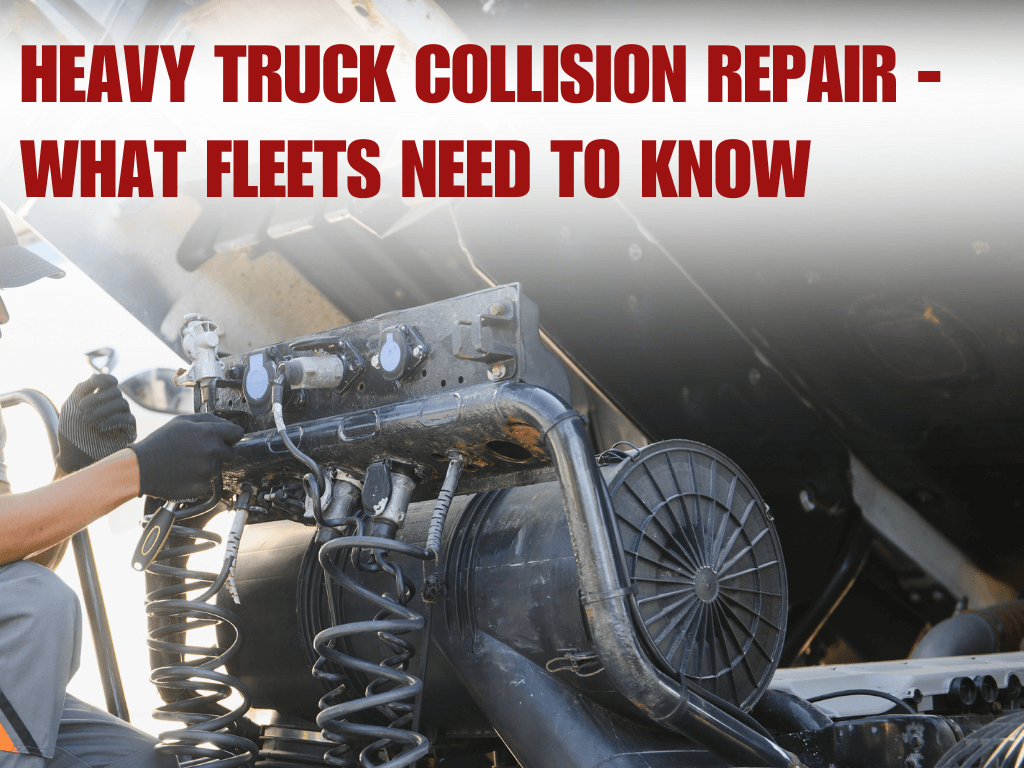
Heavy truck collisions disrupt more than just one vehicle, they halt deliveries, idle drivers, and strain fleet schedules when rigs sit sidelined for weeks. For fleet managers and owner-operators, understanding heavy truck collision repair means knowing how to minimize downtime, control costs, and ensure trucks return to service safe and compliant. Proper heavy truck collision repair addresses frame integrity, suspension realignment, and component replacement under heavy-duty standards, preventing future failures on long hauls.
This guide breaks down what fleets need to know about heavy truck collision repair, from damage assessment through final road tests, with practical insights on timelines and pricing.
Common Heavy Truck Collision Damage
Collisions on heavy truck jobs rarely limit themselves to surface panels. Impacts transfer force through thick frames, multi-axle suspensions, and load-bearing components.
Front-end crashes often bend ladder frames, radiator supports, and steering gear while cracking hoods, grilles, and cab corners. Side impacts damage fuel tanks, running boards, toolboxes, and air line brackets. Rear collisions twist fifth-wheel mounts, landing gear, and trailer hitches.
Suspension and axle shifts create uneven tire wear and pulling, while hidden frame cracks compromise GVWR ratings. Fleets need heavy truck collision repair that catches these issues early to avoid DOT violations or roadside breakdowns.
Step 1: Comprehensive Damage Assessment
Every heavy truck collision repair starts with a full teardown inspection that goes beyond visible dents.
Technicians measure frame dimensions against OEM specs using 3D scanners, check axle perpendicularity, and test suspension geometry. Cab tilt mechanisms, hydraulic rams, and sleeper compartments get close scrutiny for stress cracks.
Photos, CAD diagrams, and written reports form the repair authorization. Insurance appraisers rely on this detail for approvals, while fleets use it to plan substitute rigs and driver reassignments during heavy truck collision repair.
Step 2: Frame Straightening and Structural Work
Frames define heavy truck collision, a bent one means unsafe handling and illegal load limits.
Specialized ceiling-mounted pullers with 40-ton capacity correct multi-point damage through measured pulls. Laser tram systems verify squareness to within 1/8 inch over 50 feet. Welded reinforcements replace cracked crossmembers or outriggers.
This phase takes the longest in heavy trucks, often 5-10 days, because precision here prevents tire scrub, oil pan contact, or fifth-wheel slide failures later.
Step 3: Component Replacement and Rebuild
Steel cab components get sectioned and welded or swapped entirely. Aluminum panels like, hoods and fenders, receive heat-formed repairs. Fifth wheels, air sliders, and suspension hangers return to factory torque specs.
Electronics, sensors, ECUs, and dash clusters face post-repair programming. Brake chambers, gladhands, and ABS modulators test for leaks and function before reassembly in heavy trucks.
Step 4: Body Panels, Paint, and Refinishing
Cosmetic restoration in heavy trucks follows structural work to protect investments.
Panels align to even gaps, then move through media prep, epoxy priming, and base/clear application in oversized downdraft booths. Fleet colors match exactly, with logos and DOT numbers restored via stencils or vinyl.
Chrome stacks, tanks, and trim get polished or replated. Final buffing achieves wet-paint gloss that resists road grime and holds resale value.
Step 5: Systems Testing and Road Verification
No heavy truck collision repair finishes without rigorous function checks. Air system leak-down tests, suspension air-ride leveling, and power steering pressure verify full operation.
Why Choose Auto Hut Truck Center for Heavy Truck Collision Repair
Auto Hut Truck Center specializes in heavy truck collision repair for fleets that cannot afford downtime or subpar fixes. Our certified technicians, backed by years of handling Freightliner, Peterbilt, Kenworth, and Volvo rigs, use 40-ton frame machines and frame corrections within OEM tolerances.
We partner directly with Ontario’s top insurance providers, processing claims on your behalf with dedicated adjuster liaisons to accelerate approvals and maximize payouts. Every heavy truck collision repair comes with a lifetime workmanship warranty, OEM-equivalent parts, and fleet-priority scheduling that cuts weeks off typical timelines.
From single tractors to 50-truck fleets, Auto Hut Truck Center delivers heavy truck collision repair that restores safety ratings, resale value, and road confidence.