If your truck has just been in a collision, the stakes feel immediate: deliveries delayed, drivers idle, and repair costs piling up fast. One wrong choice in repairs can mean weeks of downtime, safety risks on the road, or even bigger bills later from hidden damage. That’s exactly when trusted truck collision repair becomes your best move, delivering structural fixes, clear timelines, and costs you can actually plan for without surprises.
This blog breaks down what goes into truck collision repair, from cost factors and repair stages to average turnaround times, so you know what to expect before you even step into a repair center.
What Counts as Truck Collision Damage?
Collision damage on a truck is rarely just skin deep. Even when the impact looks minor, force can travel through the frame, suspension, and safety systems, creating hidden issues that show up later as serious failures.
Common issues seen in truck collision repair include bent frames, damaged bumpers and side panels, misaligned axles and suspension, broken lights and mirrors, and damage to radiators or intercoolers. Proper inspection and repair protect both safety and long-term operating costs by preventing uneven wear, poor handling, and repeat breakdowns.
Stages in the Truck Collision Repair Process
Understanding the process behind truck collision repair helps you set expectations and plan around downtime.
- Initial inspection and estimate: Technicians assess visible and suspected damage, check alignment and structure, and provide a preliminary estimate that may be refined after disassembly.
- Disassembly and hidden damage check: Damaged sections are opened up so the team can find bent mounts, cracked components, and hidden structural issues before finalizing the repair plan.
- Frame straightening and structural repair: If the frame or chassis is affected, specialized equipment is used to bring measurements back to specification so handling, load capacity, and safety are restored.
- Body, panel, and component work: Panels, bumpers, lights, fenders, and accessories are repaired or replaced to ensure correct fit, function, and appearance.
- Paint, refinishing, and reassembly: Surfaces are prepared, color-matched, painted, and blended, then the truck is reassembled, aligned, road-tested, and checked before being released.
A professional truck collision repair process focuses on both what you can see and what you cannot, making sure the truck is genuinely ready for work, not just “good enough” to roll out the door.
Cost and Turnaround Time Factors
The cost of truck collision repair can vary widely, but several key factors tend to drive the final bill.
- Damage severity: Structural and frame damage requires more time, equipment, and expertise than cosmetic repairs.
- Parts and materials: OEM vs aftermarket parts, specialty components, and paint systems influence both price and longevity.
- Vehicle type and configuration: Custom bodies, liftgates, refrigeration units, toolboxes, and aero kits add complexity to repairs.
- Labor and diagnostics: Access, disassembly, and accurate measuring take time, especially on larger or heavily equipped trucks.
Turnaround time for truck collision repair depends on the same elements plus parts availability, insurance approvals, and the repair center’s workload. Minor to moderate repairs may take days to a couple of weeks, while major structural jobs can extend further. Consistent communication from the shop is critical so you can plan routes and resources while the truck is down.
How to Choose the Right Truck Collision Repair Center
Not every facility is built for heavy-duty truck collision repair, so choosing the right one directly affects safety, cost, and downtime.
Look for a center that has proper frame and alignment equipment for trucks, technicians experienced with commercial and fleet vehicles, and a track record with structural as well as cosmetic repairs. Clear estimates, photo or written documentation, and regular updates are also essential, especially when insurance is involved.
A strong truck collision repair partner understands that every truck is a revenue asset and prioritizes repairs that are safe, durable, and aligned with your operational needs.
Why Choose Auto Hut Truck Center for Truck Collision Repair
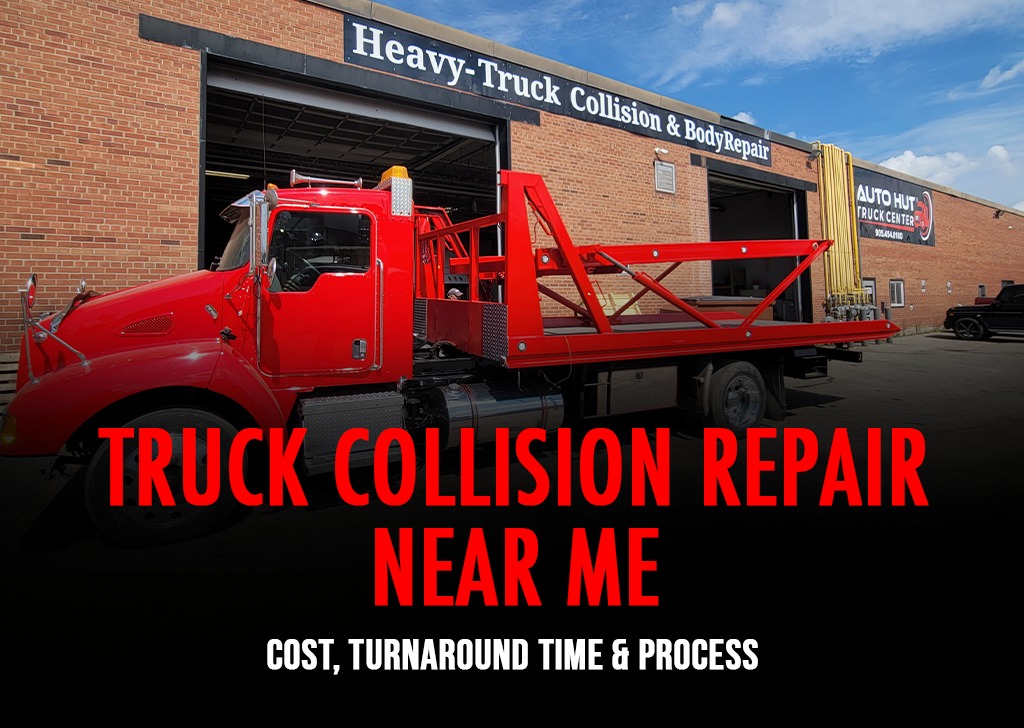
When your truck is off the road, you need more than promises, you need a repair partner that treats uptime, safety, and transparency as non-negotiables. At Auto Hut Truck Center, truck collision repair is handled in a facility designed specifically for commercial and heavy-duty vehicles, not as an afterthought in a car-focused shop.
- Dedicated heavy-duty collision facility built specifically for trucks and commercial vehicles
- Skilled technicians experienced in frame, structural, and body repairs for a wide range of truck types
- Advanced equipment for accurate frame straightening, alignment, and diagnostics
- Transparent estimates, clear communication, and assistance with insurance coordination
From minor body damage to major structural impact, your truck collision repair at Auto Hut Truck Center is handled with a focus on safety, durability, and minimizing downtime.